Sod Calculator
Calculate exactly how much sod you need for your lawn. Enter length and width to get square footage, number of pallets (1 pallet = 450 sq ft), rolls (1 roll = 10 sq ft), and total cost including delivery and installation.
💡 Pallet cost ranges: $150–450 depending on grass type and region. Includes delivery from many suppliers.
💡 Professional installation: $0.75–2.00/sq ft. DIY saves this cost entirely.
🌱 1 pallet = 450 sq ft (standard). 1 roll = 10 sq ft. Always round up to the nearest pallet — you can't buy partial pallets. Include 5–10% extra for cuts and irregular edges.
🌱 Sod Estimate Results
How to Use the Sod Calculator
Measure your lawn area in feet. For rectangular lawns, simply enter length and width. For irregular shapes, break the lawn into smaller rectangles, calculate each, and add them together. Select your grass type based on your climate zone and sun exposure. Adjust the cost per pallet to match local supplier pricing. Choose whether you want DIY or professional installation. Click Calculate Sod to see how many pallets and rolls you need.
Understanding Sod Measurements
- Pallet — A standard pallet of sod covers 450 square feet. It contains roughly 50–75 rolls or slabs stacked on a wooden pallet. A pallet weighs 1,500–3,000 lbs depending on moisture content. Most suppliers deliver by the pallet.
- Roll — One roll of sod is typically 2 ft × 5 ft = 10 sq ft. Some farms cut rolls at 18" × 5 ft (7.5 sq ft). Our calculator uses the standard 10 sq ft roll. Rolls are easier to handle than slabs and install faster.
- Square foot pricing — Sod typically costs $0.35–0.85 per square foot for the material alone. This is $160–380 per pallet. Premium grass types (Zoysia, high-end Fescue) can run $350–450 per pallet.
Grass Type Selection Guide
| Grass Type | Climate Zone | Sun/Shade | Cost/Pallet |
|---|---|---|---|
| Bermuda | Warm (South) | Full sun only | $160–250 |
| Zoysia | Transition / Warm | Sun to part shade | $250–400 |
| St. Augustine | Warm / Coastal | Shade tolerant | $200–300 |
| Kentucky Bluegrass | Cool (North) | Sun to light shade | $200–350 |
| Tall Fescue | Cool / Transition | Sun to moderate shade | $180–300 |
| Centipede | Warm / Southeast | Full sun | $170–230 |
DIY Sod Installation Tips
- Prepare the soil — Remove all existing grass, weeds, rocks, and debris. Till the soil to 4–6 inches deep. Add 1–2 inches of compost or topsoil and rake smooth. The final grade should slope away from your house (1 inch drop per 4 feet minimum).
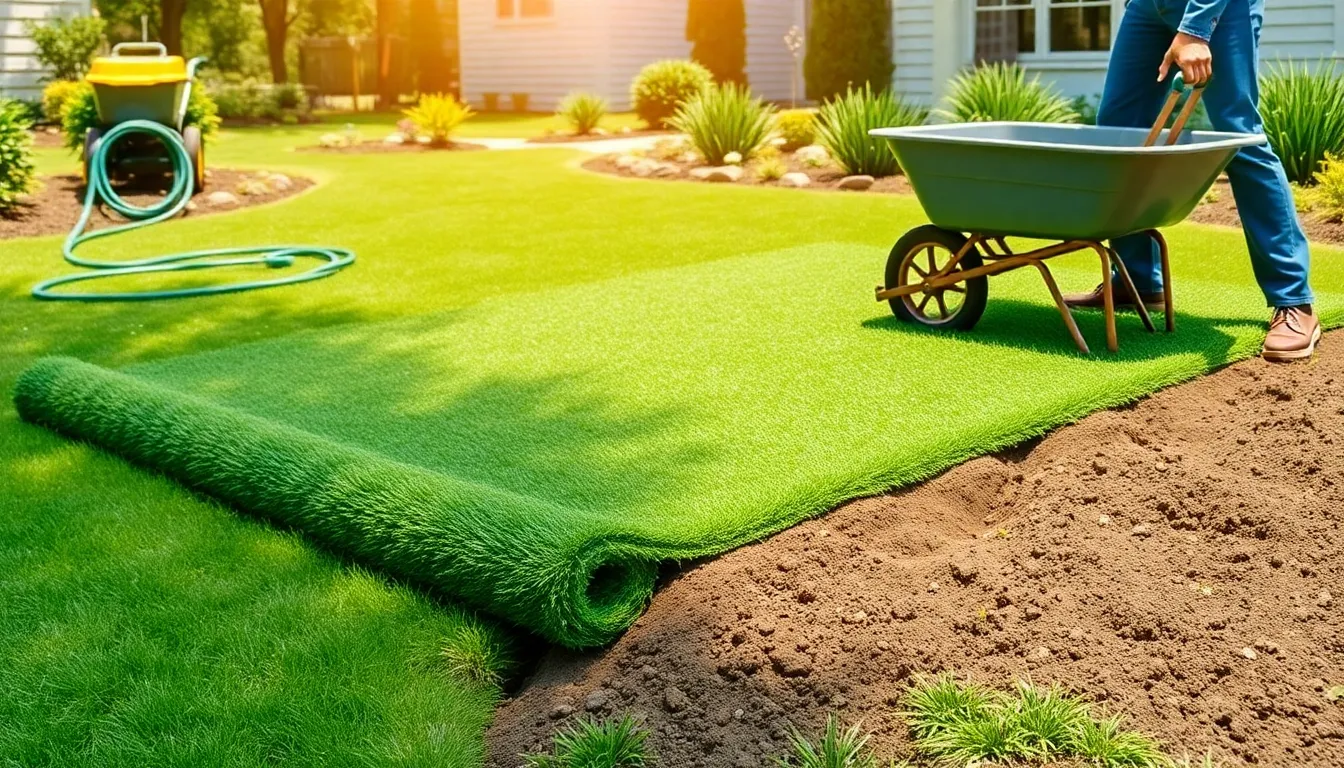
- Install immediately — Sod is a living product. Install it within 24 hours of delivery — ideally the same day. If you must wait, keep pallets in the shade and lightly water the rolls. Stacked sod generates heat and can start composting within 48 hours.
- Stagger the seams — Lay sod in a brick pattern (offset joints) so seams don't line up. This prevents erosion channels and looks more natural. Butt edges tightly together but don't overlap — overlapping edges die.
- Water heavily at first — Water to soak through the sod and into the soil beneath (about 1 inch) immediately after installation. For the first 2 weeks, water daily (morning and evening in hot weather). After roots establish (2–3 weeks), reduce to 2–3 times per week.
- Don't walk on it — Keep foot traffic off new sod for at least 2 weeks. The first mowing should wait until the grass reaches 3–4 inches tall (usually 2–3 weeks after installation).